Get free quotes from septic inspection near you
Takes about a minute. Free, no obligation; providers reply to you directly.
My neighbor listed his house in March and the buyers’ agent ordered a septic inspection as a condition of closing. He had no idea where the tank was. No pumping records. No installer paperwork. The inspector showed up, spent 45 minutes probing the yard with a rod trying to locate the lid, charged $375 for the visit, and left without completing the report. Closing got delayed three weeks.
Don’t be my neighbor.
The Short Version:Gather your system records, locate the tank access lid, clear the drain field, and walk the property before the inspector arrives. Do this whether you’re a homeowner maintaining your system or a real estate professional managing a transaction. Missing paperwork and inaccessible tanks are the two most common reasons inspections get delayed or fail outright.
Key Takeaways
- Septic inspections for real estate transactions are fundamentally different from routine maintenance checks — most general home inspectors aren’t certified to do them properly
- Missing pumping records from the past 2-3 years are a red flag inspectors take seriously
- Tank pumping is every 3-5 years; full inspections should happen every 1-3 years
- Locating and exposing the tank access lid before the inspector arrives can save you time and money
The Complete Pre-Inspection Checklist
Step 1: Pull Your Documentation (Do This First)
Before anything else, find these records:
- System installation date and original installer name/contact
- Tank size (gallons) and system capacity (number of bedrooms it’s rated for)
- Complete pumping history — dates and service provider info
- Previous inspection reports
- Records of any repairs or upgrades
- Township compliance documentation if applicable
Here’s what most people miss: gaps in this paperwork aren’t just an inconvenience. Inspectors treat missing or incomplete maintenance records as a signal that the system may have been neglected or improperly serviced. If you can’t produce pumping records from the last 2-3 years, that becomes part of the report — and part of the negotiation, if you’re in a transaction.
Reality Check:A missing pumping record doesn’t mean your system is failing. But it hands the other party’s agent a negotiating chip. Get current before you list.
Step 2: Locate the Tank and Clear Access
Inspectors can’t inspect what they can’t reach. Before they arrive:
- Find the tank lid — use your original site plans if you have them, or probe the yard yourself
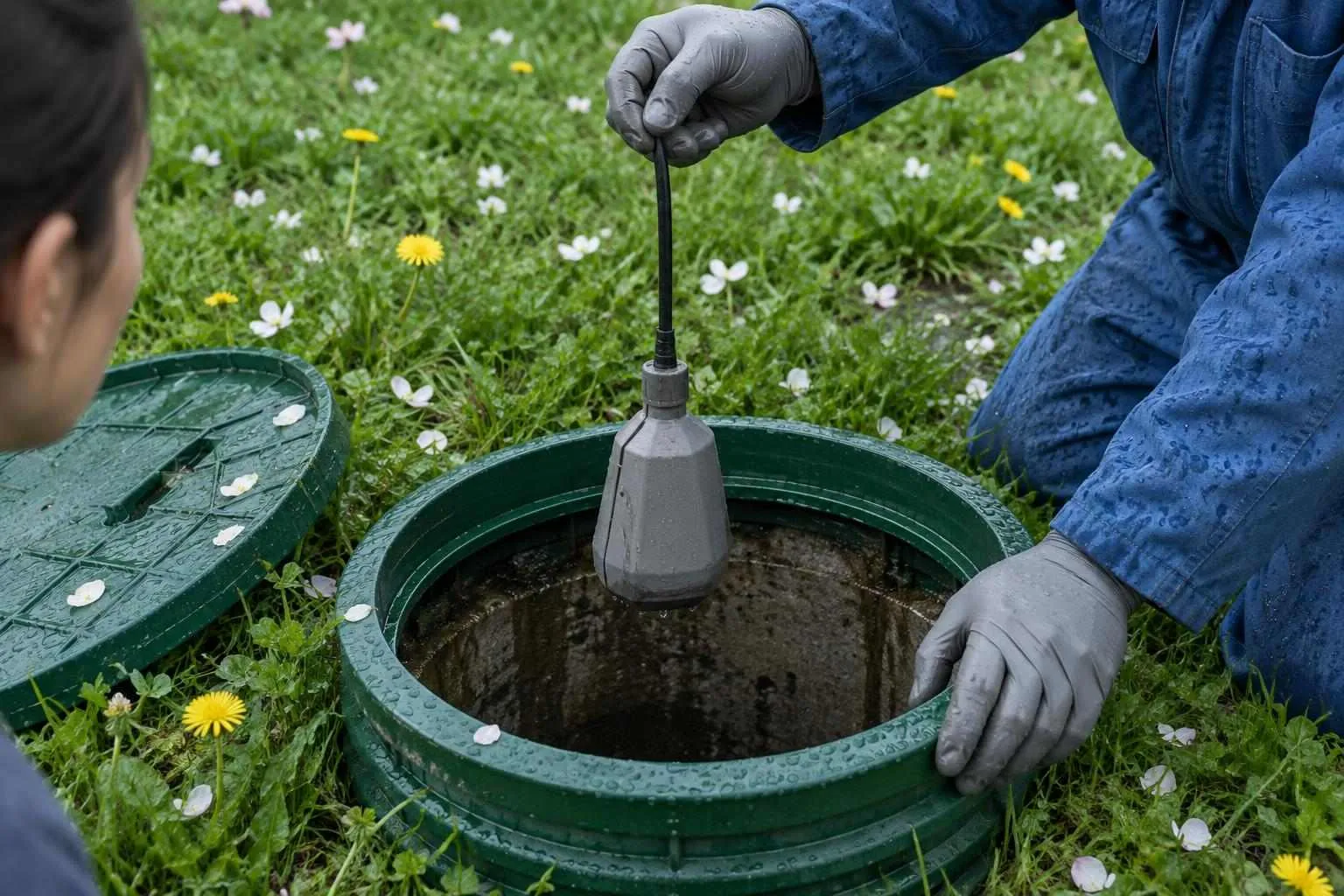
- Expose the access ports if they’re buried (this is your job, not the inspector’s)
- Check the area around the tank for settlement or sinking, and note it
- Remove anything stored on top of the tank area
Tank lids buried even a few inches under soil can add significant time to an inspection visit. Some inspectors bill for that extra time. Some just reschedule.
Step 3: Prepare the Drain Field
- Clear any vegetation or debris obscuring the field area
- Verify nothing heavy is parked or stored over the system — vehicles and structures can crush underground piping
- Confirm the drain field location is documented and accessible
- Note any trees or shrubs nearby — root intrusion is a real failure mode, and grass is the only vegetation that belongs over a drainfield
Pro Tip:Take a photo of your drain field before the inspector arrives. If there are wet spots, lush green strips of grass, or standing water, photograph those specifically. This baseline data helps the inspector calibrate what they’re seeing.
Step 4: Do an Interior Walkthrough
Walk your home and document:
- Slow-draining sinks, tubs, or toilets
- Gurgling sounds from any drain
- Sewage backing up into fixtures
- Unusual odors from drains
You’re not diagnosing anything — you’re giving the inspector context. A system that drains slowly inside and has wet spots outside tells a cleaner story than a system that looks fine inside but has soggy areas over the field.
Step 5: Walk the Exterior and Note Warning Signs
- Standing water or soggy spots over the drain field
- Unusually lush, green grass growing in strips (potential leakage indicator)
- Strong sewage odors anywhere on the property
- Pooling liquid at the surface
None of these automatically mean failure. But walking the property before the inspector arrives means you’re not discovering problems together in real-time — you’re presenting findings, which is a different dynamic entirely.
Routine Maintenance vs. Real Estate Inspection: Not the Same Thing
This distinction matters and almost nobody explains it clearly upfront.
| Factor | Routine Maintenance Inspection | Real Estate Transaction Inspection |
|---|---|---|
| Frequency | Every 1–3 years | Triggered by listing or purchase |
| Who orders it | Homeowner | Buyer’s agent or lender |
| Scope | Condition check, pumping schedule | Full evaluation: tank, baffles, distribution box, absorption field |
| Pumping included? | Sometimes | Usually required |
| Output | Maintenance recommendations | Formal report for transaction |
| Inspector certification | NAWT CI or state-licensed | Must be credentialed — general home inspectors typically can’t do this |
I’ll be honest: the “general home inspection covers everything” assumption is how buyers end up with a failing septic system on a house they just closed on. Most general home inspectors are not certified to evaluate septic systems in detail. This is a separate engagement with a separate professional.
For a full overview of what credentialed inspectors actually evaluate and how to find one, see the Complete Guide to Septic System Inspectors.
Timing: When to Schedule
| Situation | When to Inspect |
|---|---|
| Routine homeowner maintenance | Every 1–3 years |
| Tank pumping | Every 3–5 years (varies by household size) |
| Before listing a home | At least 2–3 weeks before listing if no recent inspection |
| During purchase | Before closing, as a transaction condition |
| Signs of failure | Immediately (slow drains, odors, wet spots) |
Nobody tells you this: scheduling 2-3 weeks out isn’t just about availability. If the inspector finds something that requires repair, you need time to get bids, hire a contractor, and potentially re-inspect before closing. A week of buffer isn’t enough.
Common Mistakes That Derail Inspections
- Assuming the general home inspector covered it — they didn’t, and they’re not certified to
- Leaving the tank lid buried — adds time and sometimes cost
- No pumping history — creates negotiating leverage for the other side
- Trees and shrubs over the drainfield — root intrusion that could have been caught early
- Not walking the exterior first — discovering problems with the inspector standing next to you is stressful and reactive
Reality Check:The inspector’s job is to report what they find, not to advocate for you. The more baseline information you bring to the session, the more context they have to interpret what they’re seeing accurately.
Practical Bottom Line
If you’re a homeowner: schedule a full inspection every 1-3 years, pump every 3-5, and keep a folder with your system records. Locate the tank lid now, while it’s not urgent.
If you’re a real estate professional: make septic inspection a standard transaction condition on any property with an onsite system. Confirm the listing side has records before you order the inspection. A 30-minute conversation with your seller about documentation beats a three-week closing delay.
The checklist above covers everything the inspector needs from you before they arrive. The rest is their job.
Find a credentialed septic system inspector in your area to get started.
Done reading? Get quotes from septic system inspectors near you.
Takes about a minute. Free, no obligation; providers reply to you directly.
Popular cities:
Nick built this directory to help homebuyers and homeowners find credentialed septic inspectors who provide unbiased evaluations — a conflict of interest he encountered firsthand when inspectors tied to pumping companies recommended costly repairs that an independent evaluator later deemed unnecessary.