Get free quotes from septic inspection near you
Takes about a minute. Free, no obligation; providers reply to you directly.
My neighbor discovered her septic system had been failing for three years — slowly, quietly, expensively. The drainfield was saturated, the tank baffles were rotted, and the inspector she’d paid $150 to during the home purchase had basically walked around the yard, poked a stick in the ground, and called it done. She ended up with a $22,000 replacement bill. The inspector’s report? Four sentences.
That story is more common than you’d think. The septic inspection industry has no universal standard. Licensing requirements vary wildly by state. Anyone with a truck and a probe rod can call themselves an inspector in some jurisdictions. Which means the difference between a useful inspection and a liability shield disguised as one comes down entirely to who you hire — and what you ask before you do.
The Short Version:A good septic inspector is licensed, insured, pulls the tank lid, pumps the tank, checks every component, and gives you a written report with photos. A bad one charges half as much, skips the pump, and hands you a checkbox form. Ask these 15 questions before you hand over a check.
Key Takeaways
- Licensing and insurance are non-negotiable — and you should verify both independently
- A real inspection includes pumping the tank, not just a visual walkthrough
- The report format matters as much as the inspection itself — photos and repair timelines are essential
- A good inspector will tell you things you don’t want to hear; that’s exactly what you’re paying for
For a full overview of what septic inspectors do and when you need one, start with The Complete Guide to Septic System Inspectors.
The 15 Questions
1. Are you licensed in this state? Licensing requirements for septic inspectors vary dramatically by state — some require a specific septic evaluator license, others fold it into plumbing or home inspection credentials. Ask for the license number and verify it yourself with your state’s licensing board. A real professional will hand it over without hesitation.
2. Are you insured, and for how much? General liability and errors-and-omissions (E&O) coverage protect you if the inspector misses something that costs you money later. E&O specifically covers professional mistakes — without it, you have no practical recourse if they blow a call on a failing drainfield. Ask for a certificate of insurance, not just a yes.
3. Do you hold any national certifications? The National Association of Wastewater Technicians (NAWT) offers a Certified Inspector (CI) credential that requires training, testing, and continuing education. It’s not required everywhere, but it signals someone who takes the field seriously beyond the minimum state bar. A NAWT CI in your area is worth paying a bit more for.
4. How many inspections have you done in the past year? Experience matters, but recent, active experience matters more. Someone who did 200 inspections a decade ago and 12 last year is a different animal than someone doing 150 annually right now. You want someone who’s seen a lot of systems recently — failure modes evolve, and local soil and system types vary.
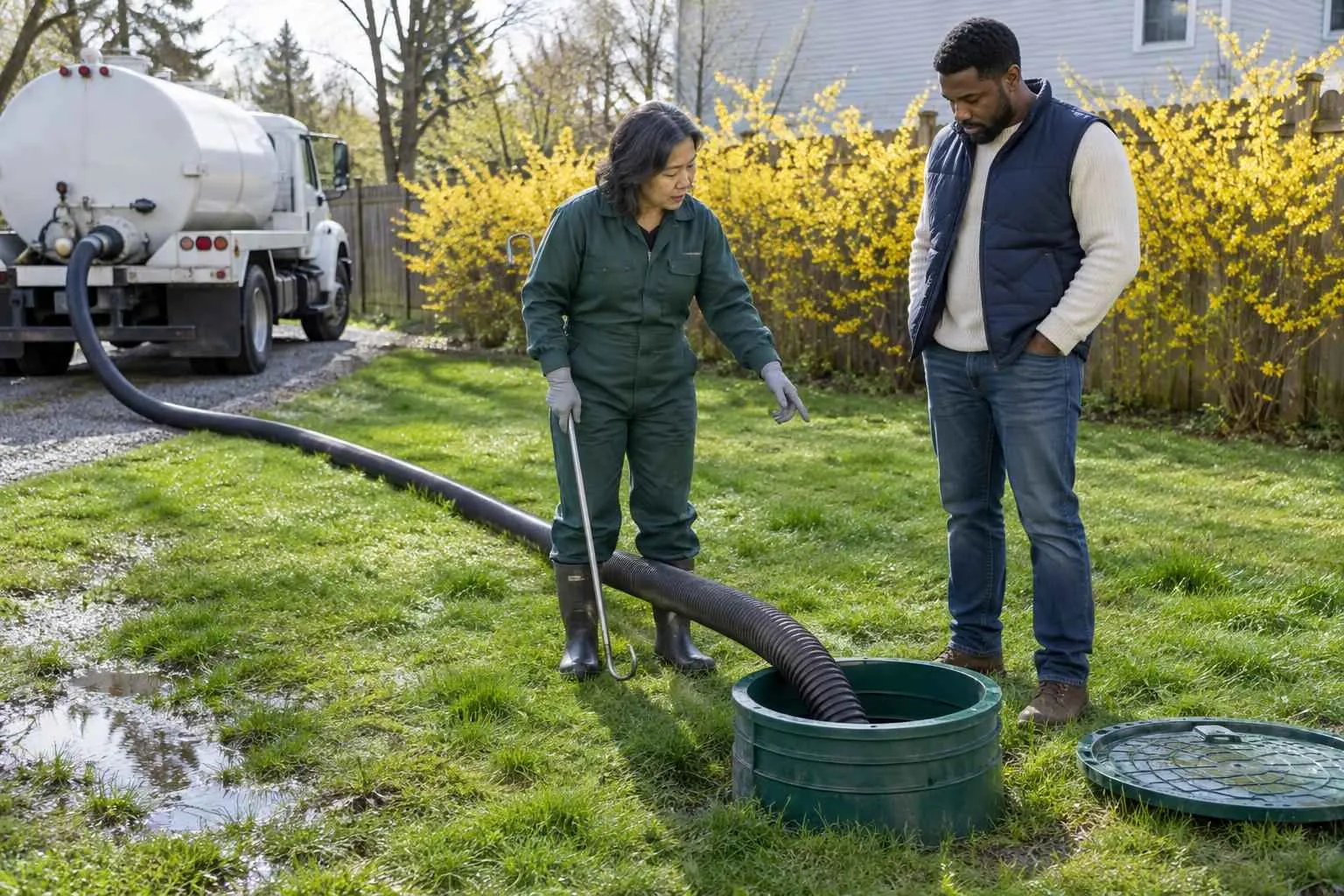
5. Will you pump the tank as part of the inspection? Here’s what most people miss: you cannot properly inspect a septic tank without pumping it. The sludge and scum layers obscure the inlet and outlet tees, hide cracks, and mask water level problems. A “visual only” inspection is not a real inspection. If they say no, find someone else.
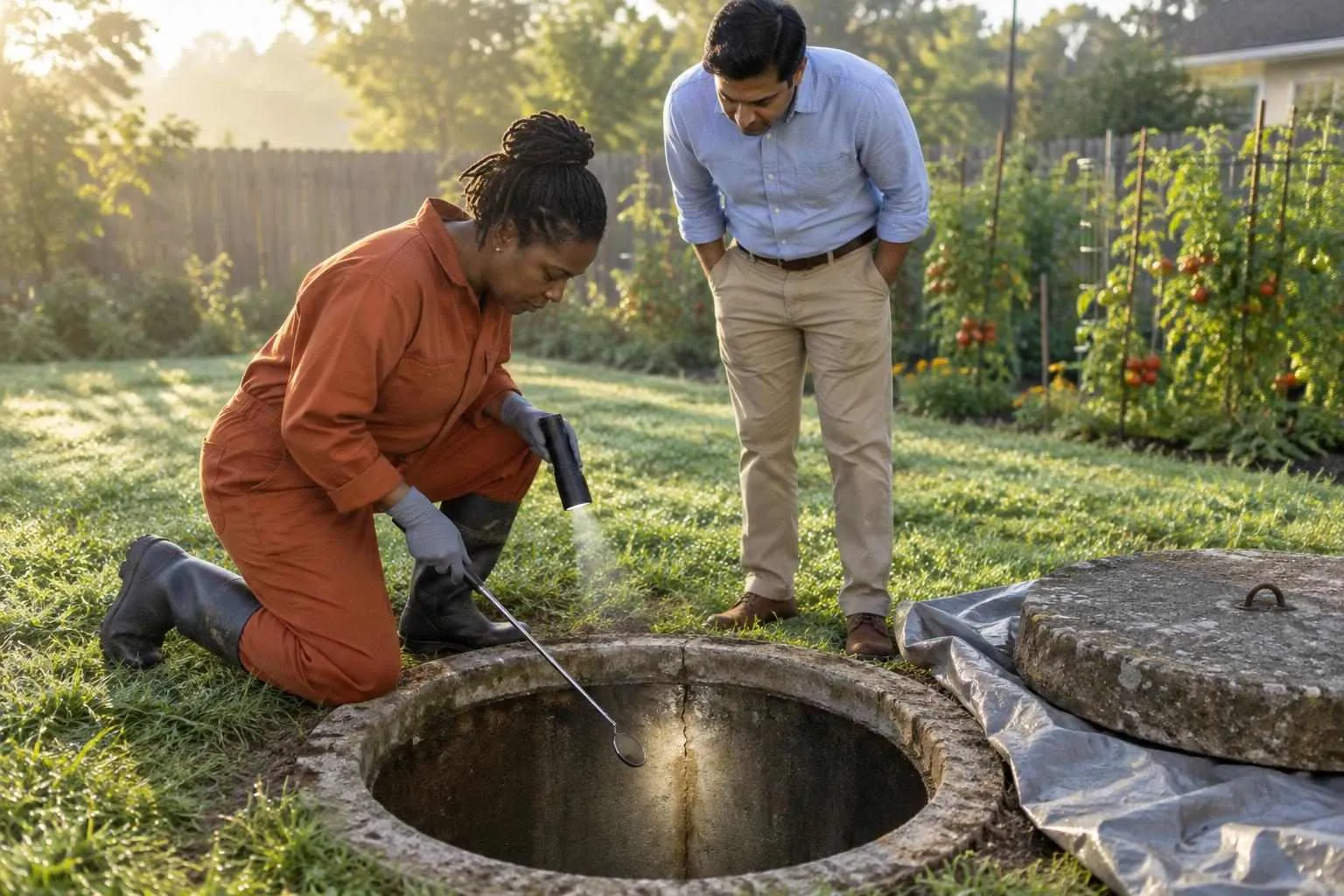
6. What does a full inspection include, step by step? A legitimate inspection covers: locating all system components, pumping the tank, inspecting inlet and outlet baffles, checking the distribution box, probing the drainfield for saturation, assessing the tank’s structural condition, and testing water flow. If they describe something shorter than that, it’s a partial inspection — and you should price it as such.
Reality Check:Some inspectors offer a “limited” or “visual” inspection at a lower price point. That’s fine for certain situations — but not for a home purchase or a system showing signs of trouble. Know what you’re buying before you agree to a price.
7. How do you assess the drainfield? The drainfield is where most systems fail, and it’s also the most expensive component to replace. Ask specifically: do they probe the soil, check for surface saturation, look for lush vegetation patterns, or run a dye test? A vague answer here is a red flag.
8. Will you check the inlet and outlet tees? Baffles and tees direct flow through the tank and prevent solids from entering the drainfield. They deteriorate over time, especially older concrete or steel tees. Checking them requires pumping the tank — another reason that step isn’t optional.
9. What report do I receive, and does it include photos? A written report with photos is the minimum acceptable deliverable. The report should document tank condition, component integrity, drainfield status, and any recommended repairs with suggested timelines. A verbal summary in a parking lot is not a report.
| Inspector Type | Typical Deliverable | Useful For |
|---|---|---|
| Full inspection + pump | Written report, photos, repair timeline | Home purchase, system concerns |
| Visual-only inspection | Checkbox form, brief notes | Routine monitoring (low-risk situations) |
| Dye test inspection | Written test results | Regulatory compliance, real estate disclosure |
| Pre-purchase inspection | Full report + repair cost estimates | Negotiating repairs in a transaction |
10. How old is the system, and how do you determine that? Older systems have higher failure risk, and age affects the type of components you’re likely to find (concrete vs. PVC, steel baffles vs. sanitary tees). A good inspector will cross-reference permit records, tank markings, and component condition to estimate age — not just shrug.
11. What are the most common failure modes you see in this area? This is a question designed to reveal local expertise. Inspectors who work a specific region know the soil types, water table conditions, and common system designs that drive failure in that area. A generic answer suggests they’re not deeply familiar with your local context.
Pro Tip:If the inspector can name the specific soil classification in your county and explain how it affects drainfield sizing, you’ve found someone who actually knows what they’re doing.
12. What would trigger a “failed” finding on your report? Understand their threshold before they inspect. Active sewage backup, saturated drainfield, compromised tank structure, missing or failed baffles — these are clear failures. Knowing their criteria upfront helps you interpret the report and protects you from someone who grades on a curve to avoid difficult conversations.
13. If you find problems, do you do the repair work? This isn’t disqualifying, but it’s worth knowing. An inspector who also does repairs has a financial incentive to find problems. It’s not inherently corrupt — many excellent inspectors offer both services — but ask whether they’ll provide a written repair estimate separate from the inspection report, and consider getting a second opinion on any major finding.
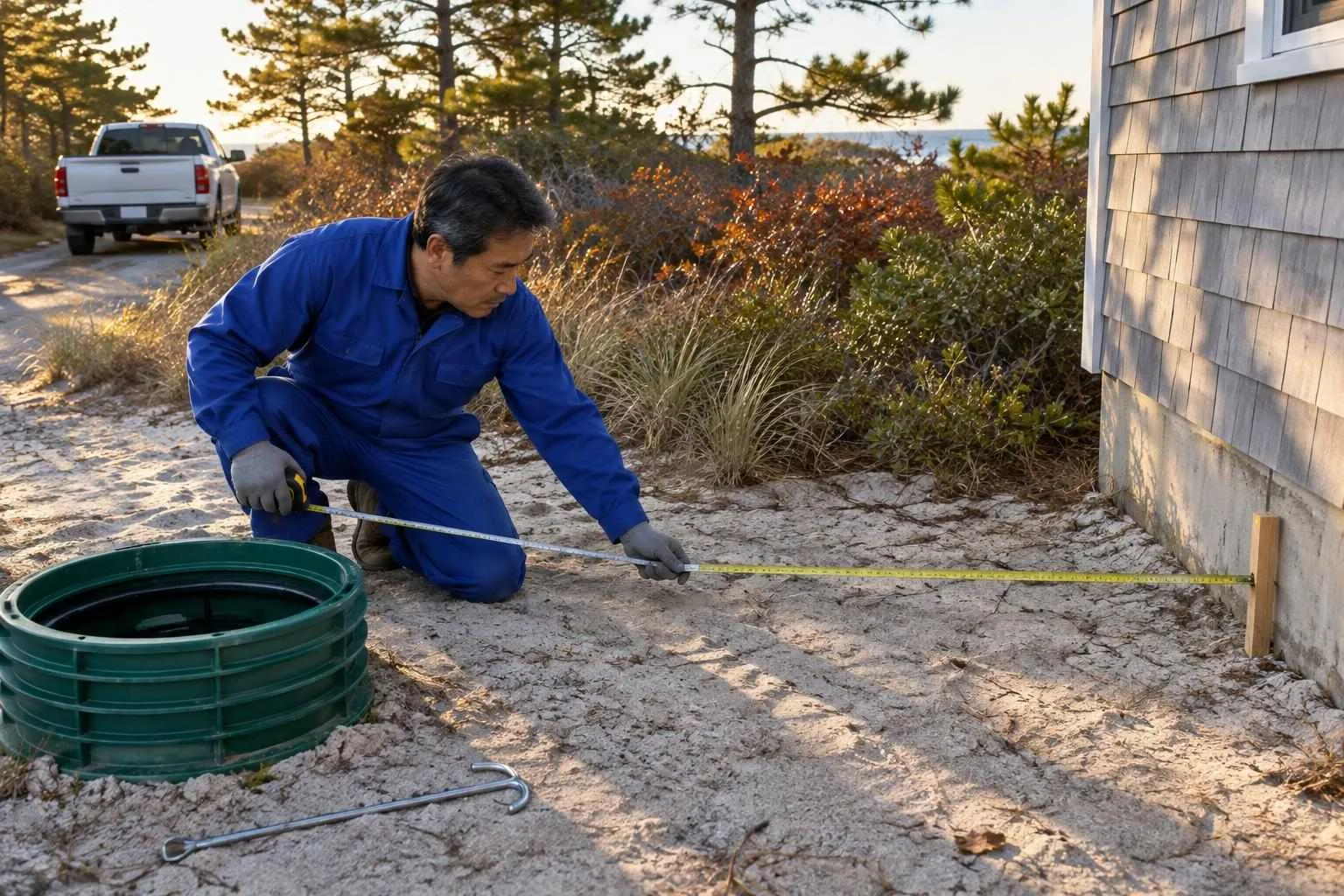
14. How should I prepare the property before you arrive? Good inspectors will ask you to locate system records (permits, prior inspection reports, pump logs), clear access to the tank lid, and have water available for flow testing. If they don’t ask anything about preparation, they’re not thinking about doing a thorough job.
15. Can you provide references from recent clients? Asking for references filters out fly-by-night operators fast. Two or three recent homeowner references — not a contractor they work with regularly — tells you whether they communicate clearly, show up when they say they will, and produce reports that are actually useful.
Practical Bottom Line
Before you book anyone, pull their license number and verify it. Ask for a certificate of insurance. Confirm they pump the tank. Ask what the report looks like — if they can’t show you a sample, that’s your answer.
The inspection is cheap. The repair bill isn’t. A $300–500 full inspection with a real written report is the best insurance you’ll buy in a real estate transaction or a system-concern situation.
If you’re unsure what to look for in the report itself, or want to understand what component failures actually mean for repair costs, read through The Complete Guide to Septic System Inspectors before your appointment. Walking in informed changes the whole dynamic — and a good inspector will respect you more for it.
Done reading? Get quotes from septic system inspectors near you.
Takes about a minute. Free, no obligation; providers reply to you directly.
Popular cities:
Nick built this directory to help homebuyers and homeowners find credentialed septic inspectors who provide unbiased evaluations — a conflict of interest he encountered firsthand when inspectors tied to pumping companies recommended costly repairs that an independent evaluator later deemed unnecessary.