Get free quotes from septic inspection near you
Takes about a minute. Free, no obligation; providers reply to you directly.
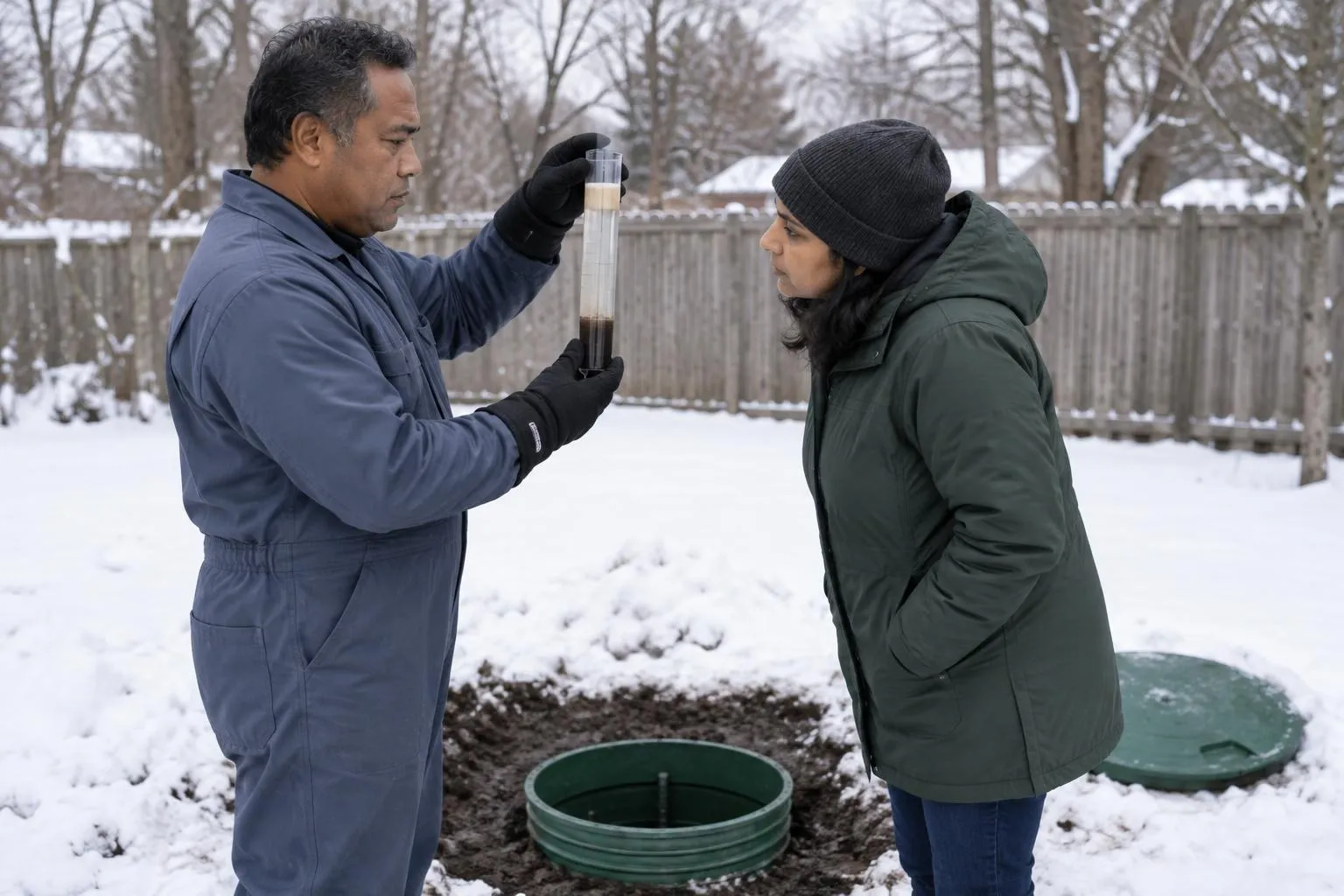
It’s the first warm weekend in March. The snow is off the lawn, and there’s a soft, green patch over the drain field that wasn’t there in February. You call the first septic company that comes up and get voicemail. Then you call the second.
That’s the scene a lot of homeowners run into every spring. Here’s how to handle it without panic or overpaying.
The Short Version: Spring works well for pumping and inspection because the ground has thawed, lids are reachable, and winter stress on the drain field is still visible. Book in late winter or early spring. Don’t pump during or right after heavy rain. If your ground thaws late, aim for late spring or early summer.
Key Takeaways
- Pumping typically runs $300 to $600, depending on tank size and region. A spring or early-summer inspection is cited at $201 to $578.
- Book early. Several service pages recommend March or early April, before the rush.
- Spring is the best time to look at the drain field. It’s not always the best day to pump. Saturated soil changes that.
- Pumping intervals run roughly 2 to 5 years depending on tank size, household size and water use. Your tank and your headcount decide, not the calendar.
Why spring gets the credit
Three practical reasons show up across the service pages I reviewed:
- Access. Thawed ground makes lids and risers easy to find and open.
- Visibility. Winter damage, such as pooling water or a soggy patch, is still visible.
- Timing. Summer means more laundry, more showers and houseguests. Spring service gets the system ready.
Real estate season matters too. If you plan to list this year, a documented inspection before the sign goes up beats a surprise during the buyer’s inspection.
Reality Check: “Spring is the best time” is mostly contractor-written advice. I found no official national septic season, no federal deadline, and no statewide inspection deadline in the research. It’s sensible guidance, not a rule. Your local health department is the only place a deadline would live.
What wet spring soil does to a drain field
The drain field (also called the leach field) is the gravel-and-soil bed where your tank’s liquid finally soaks away. In spring it takes the worst of it: snowmelt, rain, and ground that’s already full.
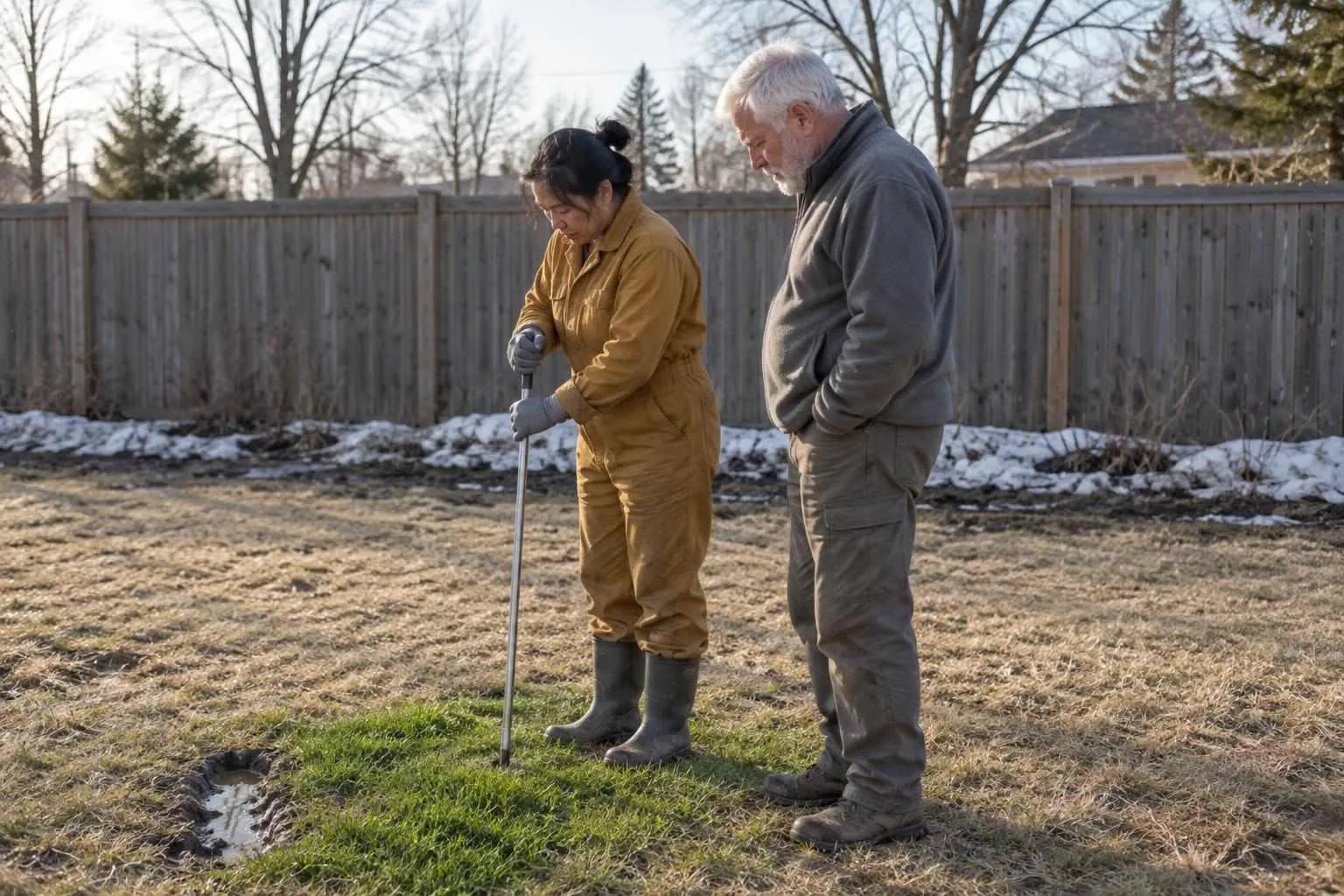
Here’s what most people miss. Soggy soil can hide a failing field. Inspectors who work in wet-spring areas say dye tests can pass in a wet spring and fail later, once the ground dries and stops flushing problems away. The fix is stress testing and, where possible, a look at the system across seasons.
Walk the field before the inspector arrives. Look for:
- Pooling water or muddy patches
- Slow drains inside the house
- Effluent surfacing on the ground
- Unusually lush grass over the field
- Sewage odor
If you see any of these, say so when you book. It changes what the visit should include.
Pro Tip: Clear brush and vegetation off the lids and note where the access points are before the truck arrives. If the crew has to hunt for lids or dig, some providers add a fee. Some also charge extra for tanks over 1,500 gallons or for extra hose length.
Don’t pump in a downpour
Avoid pumping during or immediately after heavy rain. Saturated soil makes service harder. In extreme cases, an emptied tank in waterlogged ground can shift or float.
If the forecast is nasty, move the appointment. A rescheduled pump-out costs nothing. A shifted tank is a very different bill.
Timing by situation
| Your situation | Best window | Why | Watch for |
|---|---|---|---|
| Cold winters, frozen ground | Late spring, once the ground has thawed | Lids reachable, winter damage visible | Road thaw limits can delay trucks |
| Mild winters | March to early April | Beats the spring rush | Booking fills early |
| Wet spring or high water table | After a dry stretch | Avoids saturated-soil complications | Don’t pump during or right after heavy rain |
| Dry climate | Spring, or fall and late summer | Some providers prefer lower water tables | Provider scheduling varies |
| Selling this year | Before you list | Lets you handle findings first | Buyers may still order their own inspection |
If you’re in a cold-winter area like Plattsburgh, expect the thaw, not the calendar, to set your date. Wet-spring regions like Boston reward patience on pumping day. Moderate-winter areas like Louisville can often book earlier.
How much does the rush cost you?
The sources disagree, so I’m not going to hand you a neat number. One pricing page says peak demand can push prices 10% to 20% higher. Another claims spring demand runs 20% to 40% above the off-season. Both are vendor pages, and neither gives its method.
Treat both as “expect it to cost more and fill faster.” Get at least two quotes, and ask what’s included. Is it pumping only, or pumping plus inspection? Is the lid location covered?
Also keep the safety line clear: pumping is for licensed pumping services. Never open or enter a tank yourself, because of the methane asphyxiation risk. If you’re not sure whether the person you’re hiring pumps, inspects, or both, see septic system inspector vs. septic tank inspection.
How often should you pump?
The guidance I found ranges from every 2 to 3 years for a standard household to every 3 to 5 years in some consumer guides. None of the sources gave one official national interval. Larger families, bigger water use and smaller tanks push you toward the short end.
A rough check: if you can’t remember your last pump-out, it’s probably time. Ask whoever services the system to record sludge depth each visit. That number beats a guess.
By the Numbers
According to SepticTrust directory data (see industry statistics):
- 307 verified providers listed across 47 states
- Most providers: California (32), Texas (27), Florida (19)
- NAWT Certified Inspector: 10 providers (3%); NAWT Certified: 3 (1%); InterNACHI certified: 3 (1%)
- Average years in business, where published: 35.8
Few listed providers hold any one of these credentials. That’s why it pays to ask which credential someone holds, and who issued it. See NAWT CI certification: why it matters.
The Practical Bottom Line
- Check your last service date. If you can’t find it, assume you’re due.
- Walk the drain field this week. Note pooling, odor, lush grass or slow drains.
- Call for quotes now. Ask what’s included and whether lid location or digging costs extra.
- Clear the access points before the visit.
- Move the appointment if a storm is coming.
- Compare local providers in Plattsburgh, Boston or Louisville, and confirm credentials.
Not sure what the visit should cover? Read how to prepare for a septic system inspector session. For the full picture, start with The Complete Guide to Septic System Inspectors.
Book before the rush, and keep your drain field dry enough to work on.
Done reading? Get quotes from septic system inspectors near you.
Takes about a minute. Free, no obligation; providers reply to you directly.
Popular cities:
Nick built this directory to help homebuyers and homeowners find credentialed septic inspectors who provide unbiased evaluations — a conflict of interest he encountered firsthand when inspectors tied to pumping companies recommended costly repairs that an independent evaluator later deemed unnecessary.